
How to Heal Your Tattoo: Step-by-Step Aftercare Guide
Nov
Your new tattoo is a masterpiece and a medical feat. Tattooing makes a small wound in your skin. To make it last, you need to take good care of it. This guide will help you with tattoo aftercare, using tips from artists and dermatologists.
After getting your tattoo, keep the bandage on as your artist suggests. Some places use special dressings that stay on longer. Once it’s off, wash it gently, moisturize, and protect it from sun and rubbing.
Start by washing it with fragrance-free soap every day. Use a special ointment if your artist tells you to, but switch to lotion later. When it’s fully healed, use sunscreen to keep your tattoo looking good.
This article will guide you through healing, what products to use, and how to care for your tattoo daily. With the right care, your tattoo will stay vibrant for years.
Key Takeaways
- Tattoo Aftercare starts the moment you leave the studio; follow your artist’s timing for removing the bandage.
- Use gentle, fragrance-free soap and keep cleansing light to support proper tattoo healing.
- Apply thin layers of ointment only if advised, then switch to a simple, fragrance-free lotion.
- Protect fresh ink from friction, soaking, and sun until fully healed.
- After healing, use mineral, broad-spectrum sunscreen to preserve color and detail.
- Follow tattoo aftercare instructions from licensed artists and reputable dermatology sources.
Understanding Tattoo Healing Process
The tattoo healing process is like a natural repair cycle for your body. Knowing how to heal tattoos helps you keep track of your progress. It also lets you spot any problems early and take care of your tattoo properly.
Think of this timeline as a guide. The healing speed and comfort depend on several factors. These include the tattoo size, where it’s placed, your skin type, and how well you follow aftercare instructions. Artists from New York to Los Angeles agree: gentle cleaning, light moisture, and patience are key.
Stages of Healing
Phase 1 (Days 1–3): Inflammation. You might see redness, warmth, and tenderness. It’s normal for there to be a bit of plasma or ink weeping. But watch out for severe pain, heavy bleeding, or spreading redness.
Phase 2 (Days 4–10): Scabbing and Flaking. The skin might peel like a sunburn, and you’ll see micro-scabs. Don’t pick or scratch. A thin layer of fragrance-free moisturizer can help with mild itch. Gently tapping on the skin also helps.
Phase 3 (Days 10–30): Remodeling. The top layers will start to look clearer as flakes resolve. But the deeper skin is healing too. Your ink might look cloudy or “milky” before it sharpens up. Large color pieces or joints like knees and elbows might take longer.
Importance of Proper Aftercare
Clean, lukewarm washes help reduce bacteria and excess plasma. This prevents thick scabs from forming. A light, unscented moisturizer supports the skin without trapping moisture. This is important for keeping your tattoo looking sharp.
Avoid soaking in pools, hot tubs, or lakes. Also, wait a few days before doing heavy workouts. Avoid tight fabrics that rub against your tattoo. And protect it from UV rays. These steps help your tattoo heal faster and keep the colors vibrant.
Your overall health is important too. Good sleep, staying hydrated, and not smoking improve circulation and reduce oxidative stress. For more on aftercare, check out this brief overview. If you notice fever, pus-like drainage, spreading redness, marked swelling, or pain that gets worse after day two, seek medical advice.
| Phase | Typical Timeline | What You’ll See | Helpful Actions | What to Avoid |
|---|---|---|---|---|
| Inflammation | Days 1–3 | Redness, warmth, light weeping | Gentle wash, pat dry, thin moisturizer | Scrubbing, soaking, tight friction |
| Scabbing & Flaking | Days 4–10 | Peeling like a sunburn, micro-scabs, itch | Do not pick, tap for itch, light hydration | Scratching, heavy sweat, scented products |
| Remodeling | Days 10–30+ | “Milky” look fading, clarity returning | Consistent cleansing, SPF after closure | UV exposure, abrasive fabrics, hot tubs |
Essential Aftercare Products
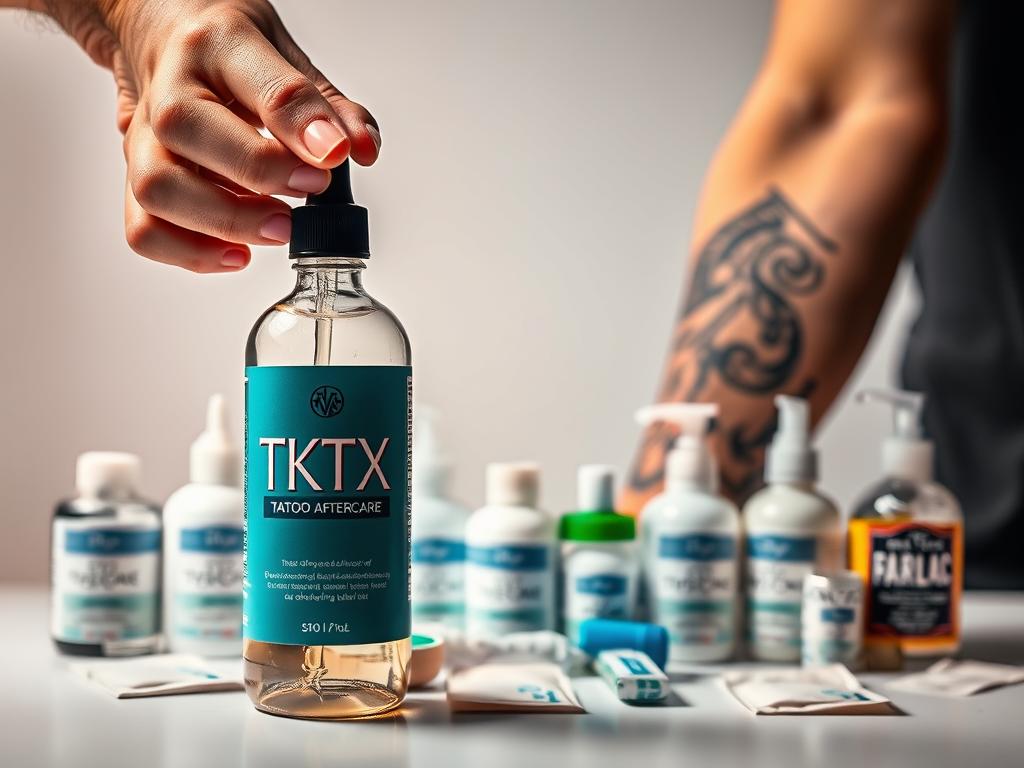
Choosing the right aftercare products is key for a healthy tattoo. A simple routine helps protect the skin and keeps the tattoo looking vibrant. Following clear instructions is important.
Choose gentle, fragrance-free, and doctor-approved products. Stay away from strong smells, harsh acids, and rough textures that can harm new skin
Recommended Ointments and Lotions
In the first 1–3 days, apply a thin layer of ointment to prevent rubbing. Options include Aquaphor, Vaseline, and fragrance-free tattoo balms.
Once the tattoo stops weeping, switch to light, non-clogging lotions. CeraVe Daily Moisturizing Lotion and Eucerin Advanced Repair are good choices. They keep the skin hydrated without clogging pores.
Avoid products with fragrances, menthol, alcohol, exfoliants, retinoids, or heavy occlusives. Use medical-grade bandages as directed by the manufacturer and your artist. These choices follow common aftercare guidelines.
Best Soaps for Cleaning Tattoos
Use gentle, pH-balanced cleansers to clean the tattoo. Dove Sensitive Skin Beauty Bar and Dr. Bronner’s Baby Unscented are good options. They keep the skin moist and remove residue.
Don’t use antibacterial soaps, harsh deodorant bars, or scrubs. Dry the tattoo with clean paper towels or air-dry to avoid lint. Buy products from trusted U.S. sources and check seals, as they touch open wounds.
Tips for Daily Tattoo Care
Good daily habits can make your tattoo look great. Follow simple tattoo care tips and a consistent aftercare routine. This helps keep your tattoo clean, colorful, and comfortable.
Wondering how to heal your tattoo with less itch and fewer problems? Start with gentle cleaning and smart moisture.
How to Clean Your Tattoo
Remove the bandage as your artist told you, usually 2–6 hours. Wash your hands for 20 seconds. Use lukewarm water and a small amount of gentle, fragrance-free soap.
Use clean fingertips to gently clean away plasma and excess ointment. Don’t scrub. Rinse well and pat dry with a clean paper towel or let it air-dry. Clean it 2–3 times a day for the first week, then less often as it heals.
Moisturizing Techniques
Apply a pea-sized amount of fragrance-free moisturizer 2–3 times a day once the skin stops weeping. Spread it evenly until the skin feels soft, not oily. Use a thin layer of ointment in the first days to avoid bacteria.
Adjust moisturizer amount based on climate and skin type. Use more in dry air and less in humid weather. Moisturizer helps with itch during the peel phase. Never pick or pull flakes. Wear clean, breathable cotton to reduce friction and improve airflow.
Avoiding Irritants
Keep fresh ink out of direct sun. Wait until the skin closes before using sunscreen. Choose a broad-spectrum mineral SPF 30+ with zinc oxide or titanium dioxide.
Avoid tight waistbands, rubbing straps, and heavy contact with gym gear for 1–2 weeks. Hold off intense sweat for 24–48 hours, then cleanse gently after workouts. Don’t use self-tanners, exfoliants, retinoids, benzoyl peroxide, or alcohol toners on the area. Keep pets away, change bed linens often, and avoid sleeping on the tattoo to limit pressure and contamination.
Common Tattoo Aftercare Mistakes
Even simple tattoo aftercare instructions can go off track when small habits slip in. To support proper tattoo healing, stay alert to moisture balance and light exposure. Use clear, practical tattoo care tips to keep your ink crisp and your skin calm.
Over-moisturizing Your Tattoo
Too much ointment or lotion can trap moisture and macerate the skin. This may prolong weeping and raise the risk of clogged pores or folliculitis, which can cause bumps and dull color. Watch for signs like persistent shine, soggy or wrinkled skin, and thick, sticky residue.
Reset your routine with gentle cleansing and full air-dry time. Then switch to a lighter, fragrance-free lotion used sparingly. Choose breathable fabrics, and avoid occlusive wraps unless your artist gives short-term guidance. These tattoo care tips align with most tattoo aftercare instructions and help maintain proper tattoo healing.
Sun Exposure and UV Damage
Ultraviolet radiation breaks down pigment and speeds fading and blur, specially in yellow and red inks. A fresh tattoo is a wound; do not apply sunscreen until the skin has sealed. In the first two to four weeks, rely on shade, UPF clothing, and timing your outings.
After healing, use a daily broad-spectrum SPF 30 or higher. Mineral filters like zinc oxide and titanium dioxide are often better tolerated on tattooed skin. Reapply every two hours outdoors and after swimming or sweat. Skip tanning beds, and avoid full submersion in chlorinated pools or saltwater until the skin is intact as part of smart tattoo aftercare instructions.
| Mistake | Visible Signs | Why It Hurts Your Ink | Quick Fix |
|---|---|---|---|
| Over-moisturizing | Shiny, soggy skin; sticky residue; raised bumps | Maceration and clogged pores can cause irritation and color loss | Cleanse, let it dry fully, apply a thin layer of fragrance-free lotion, wear breathable fabrics |
| Early sunscreen on fresh tattoo | Stinging, redness, or product buildup | Actives and occlusives may irritate an open wound | Use shade and UPF until healed; then start SPF 30+ |
| Unprotected sun on healed tattoo | Fading, dullness, blurred edges | UV breaks down pigments, specially bright colors | Apply broad-spectrum SPF 30+ daily; reapply every 2 hours |
| Tanning beds | Rapid fading, dryness | High UVA doses degrade pigment and stress skin | Avoid entirely; use protective clothing and timing outdoors |
| Swimming while healing | Tightness, dryness, irritation | Chlorine and saltwater can dry the wound and add microbes | Skip submersion until skin is intact; rinse with clean water after incidental splashes |
Keep tattoo care tips simple: follow your artist’s tattoo aftercare instructions, favor breathable routines, and protect your skin from UV to support proper tattoo healing.
Long-Term Tattoo Maintenance
Great tattoos last when you take care of your skin. After healing, start a simple care routine. Use sunscreen with SPF 30+ daily, and choose water-resistant for sports.
Wear UPF clothing for long outdoor times. Clean your skin gently and use fragrance-free moisturizers. In dry seasons, use thicker creams to keep colors bright.
Avoid rubbing your tattoos with waistbands or backpack straps. This can cause dullness and flaking.
Protecting Your Ink Over Time
Healthy skin keeps your tattoo looking good. Drink water, eat well, and don’t smoke. Use the same aftercare products but switch to lighter lotions in summer.
After workouts, clean sweat and salt off your skin. Then, apply a simple moisturizer. Reapply sunscreen every two hours, and after swimming. These steps help your tattoo stay sharp and bright.
Scheduling Touch-Ups and Professional Care
Check your tattoos yearly for fading or wear. Many U.S. studios offer free touch-ups within a year. For older tattoos, see the original artist if possible.
If you notice irritation or infection, see a dermatologist. Laser treatments should be done by experts. Follow their aftercare instructions carefully.
Keep a record of your skin’s reactions to aftercare products. Choose studios that follow safety standards. With regular care and check-ups, your tattoos will stay vibrant for years.